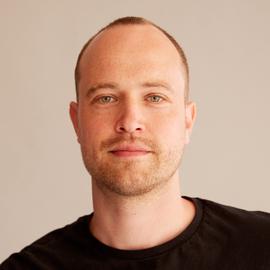
Marcus Voss
Responsible AI Lead and AI Engineer
Birds on Mars
KI Bundesverband (AG Green AI)
Climate Change AI
Biography
Marcus has over ten years of experience working as a consultant, AI engineer, project manager, researcher, speaker, and lecturer at the intersection of artificial intelligence and ecological sustainability.
As the Responsible AI Lead at Birds on Mars, he strategically leads the initiative to develop trustworthy and responsible AI systems. Marcus co-leads the “Green AI” working group at the German AI Association and is part of the core team at Climate Change AI, an international nonprofit catalyzing impactful work at the intersection of climate change and machine learning.
He completed his Ph.D. on AI applications in renewable energy systems at TU Berlin. He has been an external lecturer on AI and data science among others at TU Berlin, Leuphana University Lüneburg, the Climate Change AI summer school, and CODE University. Previously, Marcus was a research associate at the TU Berlin, where he led the Smart Energy Systems research group of the DAI Lab, working on AI applications in the smart grid and sustainable development of AI systems.
Marcus is a speaker and author about AI and sustainability in different contexts, e.g. at Kongress BW 2025, Bits and Bäume, a keynote at the DESSAI Inria-DFKI European Summer School on AI 2022 or the Bitkom Big-Data.AI summit 2022. Read our Comic Essays on AI and Sustainability: A Pigeon’s Tale and KI nachhaltig entwickeln? Seegurke sucht Seegraswiese.
If you are working on machine learning and smart meter data, check out our recent open access book on load forecasting, this Python tutorial, and our list of load datasets.
- AI and machine learning within our planetary boundaries
- Applications of AI and ML in energy systems
PhD in Computer Science, 2024
TU Berlin
M.Sc. in Information Systems, 2014
Humboldt University of Berlin
B.Sc. in Information Systems, 2011
HWR Berlin
Recent & Upcoming Talks




Featured Publications
Recent Publications
Contact
- mail@marcusvoss.com
- Berlin